CURIOSITYCBSE 2026–27★FREE – NO SIGN UPFIGURE IT OUT SETS
Chapter 2The Invisible Living World: Beyond Our Naked Eye
Class 8 Science Curiosity NCERT Solutions Chapter 2: The Invisible Living World: Beyond Our Naked Eye, with complete step-by-step solutions, explanations, and concepts for CBSE 2026-27.
a³
a²
CHAPTER 2 • ON THIS PAGE
All answers are on this single page
Questions & Step-by-Step Solutions
Complete chapter solutions with conceptual clarity and step-by-step explanations
Answer
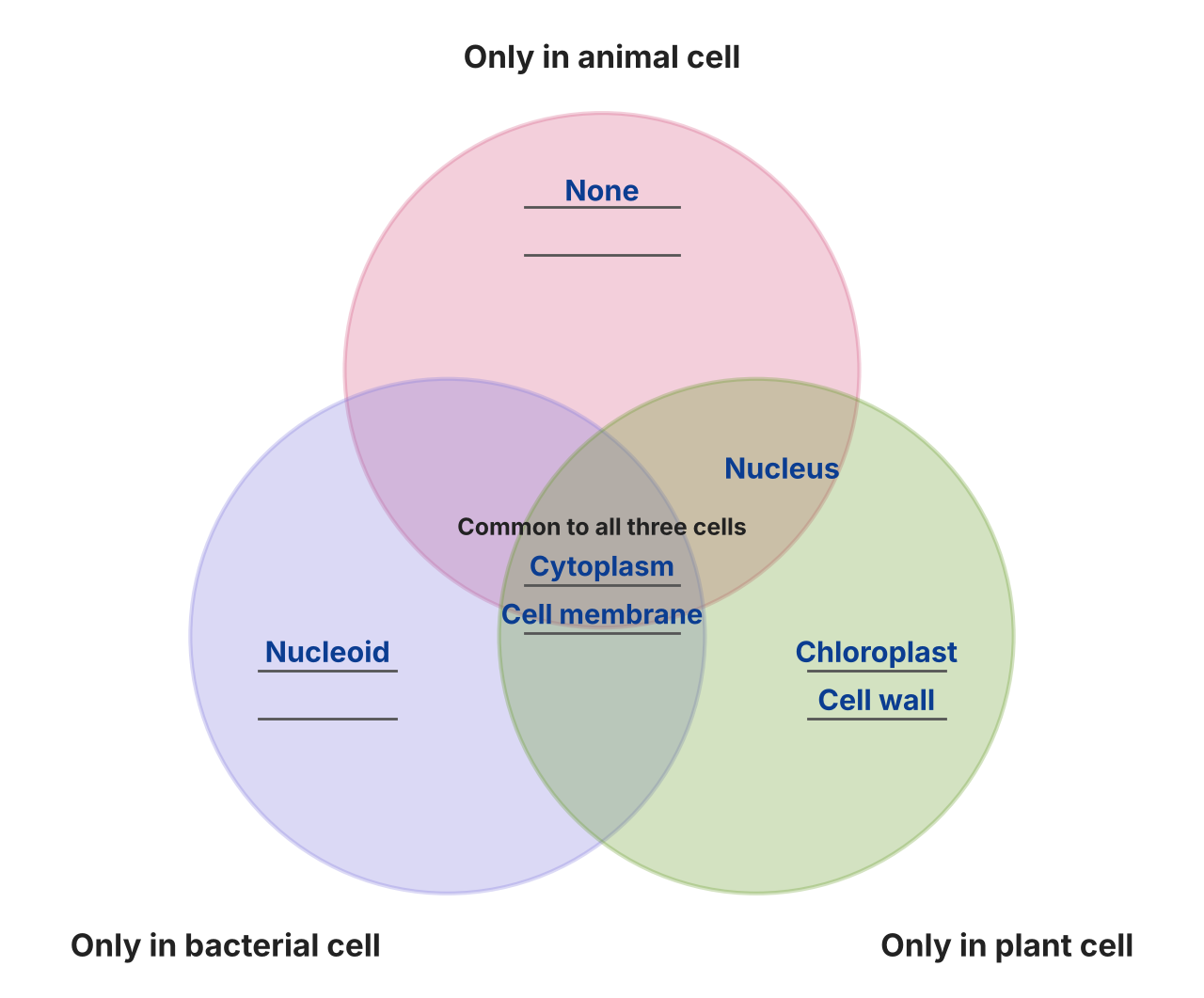
cell venn-diagram
Common to all three cells (Animal, Plant, Bacterial):
* Cytoplasm
* Cell membrane
Only in Animal Cell:
* (No unique parts from the given list)
Only in Plant Cell:
* Chloroplast
* Cell wall
* Nucleus (present in plant cells, but also in animal cells, so not 'only in plant cell' in the context of this specific list for unique parts)
Only in Bacterial Cell:
* Nucleoid
Explanation:
Cytoplasm and Cell membrane* are fundamental components found in all living cells (prokaryotic like bacteria, and eukaryotic like plant and animal cells).
Chloroplasts* are organelles responsible for photosynthesis and are found only in plant cells (and some algae).
Cell wall* provides structural support and protection. It is present in plant cells (made of cellulose) and bacterial cells (made of peptidoglycan), but absent in animal cells. However, from the given list, it's a defining feature for plant cells when differentiating from animal cells.
Nucleus* is a membrane-bound organelle containing genetic material, characteristic of eukaryotic cells (plant and animal cells).
Nucleoid* is the region in prokaryotic cells (like bacteria) where the genetic material is concentrated, as they lack a true membrane-bound nucleus.
Cellular Components and Cell Types
- •All cells (prokaryotic and eukaryotic) possess a cell membrane and cytoplasm.
- •Plant cells have a cell wall and chloroplasts, which are absent in animal cells.
- •Animal cells lack a cell wall and chloroplasts.
- •Bacterial cells (prokaryotes) have a cell wall and a nucleoid region instead of a true nucleus.
- •Nucleus is a characteristic feature of eukaryotic cells (plant and animal cells).
Was this helpful?